In the 1950s film journal, Cahiers du Cinéma, film critics Jacques Rivette, Jean-Luc Godard, Claude Chabrol and François Truffaut discussed the concepts and ideas that would lay the groundwork for arguably, film’s most influential period, the French New Wave. The self-styled ‘Young Turks’ created an independent, accessible form of filmmaking which embraced a ‘mise-en-scène’ grounded in the reality of day-to-day life in post-war Paris. In so doing, they eschewed big budget productions and the prevailing consensus of what constituted a ‘quality’ film. Central to the French New Wave was ‘auteur theory’, the idea that unique and creative films are born not through a studio driven, predetermined formula, but by the director’s own vision, philosophy and style. The empowerment of the director as the creative force, led to the disruption of existing conventions and the introduction of innovative editing and cinematography techniques which left an indelible mark on contemporary filmmaking.
Whilst studios continue to release big budget, repeatable box office successes, discussion about great films is inextricably intertwined with the directors that create them. The influence of the French New Wave can be observed in modern day director auteurs who leave an unmistakable signature on their work. From the cinematic excellence of Martin Scorsese, to the stylised gore of Quentin Tarantino, and more recently the cognitive exploration of Christopher Nolan and the visceral storytelling of Alfonso Cuarón, director as auteur has continued to be the hallmark of many of today’s critically and commercially successful films. In his critically acclaimed directorial debut Samson & Delilah (2009), writer, director & cinematographer, Warwick Thornton, embodies many of the ideals of the French New Wave:
‘The most important thing was to be truthful to these two children and make a film that I believed in and this is the community that I come from. There’s nothing in the film that I haven’t seen personally in my growing up in that town.’ Writer/Director/Cinematographer, Warwick Thornton (Thornton, 2010)
In the same vein as François Truffaut’s, The 400 Blows (1959), Thornton draws upon his own lived experience to tell the love story of two indigenous kids and their quest for survival in central Australia. Working with a skeleton crew and minimal dialogue, Thornton wrote, shot and directed the film in his hometown of Alice Springs. Using two non-professional actors from the local community in the leading roles, Thornton captured the essence and realism of life in a remote, impoverished part of the country. Although it follows that retaining the writing and directing roles would help facilitate a singular vision for a film, it is by no means a prerequisite. Auteur theory expanded on Alexandre Astruc’s concept of caméra-stylo (‘camera-pen’), which views the creative expression of a director and camera in the same vein as that of a writer and pen. A director might make a film that is beautiful and unique and the camera is her tool, her pen, which tells the story in a way that is uniquely her own.
Les Bonnes femmes (1960) — A French New Wave exemplar
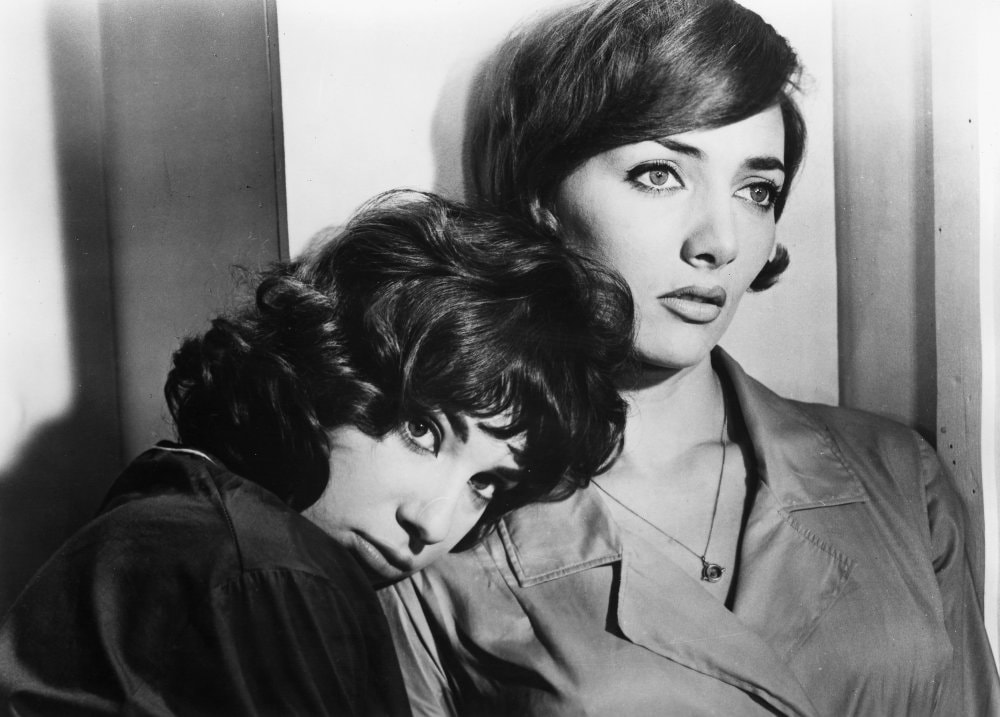
Claude Chabrol’s Les Bonnes femmes (1960) is a prime example of French New Wave filmmaking. In his first colour film, Chabrol introduces many of the defining conventions of the New Wave including the jump cut, location shooting, a handheld camera and natural lighting. The film follows the journey of four young shop assistants (the good women) in post-war Paris as they yearn for and seek romance, excitement and a better life. Chabrol, himself from a wealthy bourgeoisie background, drew upon his own experience of Parisian society and culture to explore the themes of bourgeoisie self-deception and the superficiality of the emerging consumer class. Using a documentary-like observational style with minimal plot structure, Chabrol challenged conventional filmmaking with the use of a jump cut editing technique. Jump cuts, a hallmark of French New Wave cinema, are abrupt transitions in the editing process, where a single continuous shot is cut into two parts, producing a forward jump in time. The sudden disruption and disjointed jump cut jars the audience into a sense of unease and discomfort. In the case of Les Bonnes femmes, the jump cut adds tension and a foreboding uncertainty in keeping with the fate of the four women.
In Les Bonnes femmes, jump cuts are used in conjunction with location shooting. The film was shot in and around Paris and in the French countryside, avoiding staged sets and artificial lighting. Chabrol used a handheld camera, creating a naturalistic aesthetic that grounds the film in reality and heightens the observational documentary style of the film. The cinematography is simple and unobtrusive, allowing the actors and the locations to speak for themselves. Natural lighting was used to enhance the realism and authenticity of the film, further blurring the line between fiction and documentary. The use of natural lighting, handheld cameras and location shooting became a defining characteristic of the French New Wave and has been adopted by contemporary filmmakers including the Danish Dogme 95 movement and the ‘mumblecore’ genre in American independent cinema.
The democratisation of the camera
The French New Wave also contributed to the democratisation of the camera. Prior to the movement, filmmaking was an expensive and inaccessible pursuit, requiring large crews, expensive equipment and studio backing. The New Wave filmmakers challenged this paradigm by using lightweight, portable equipment and shooting on location, making filmmaking more accessible and affordable. This democratisation of the camera has continued to evolve with the advent of digital filmmaking and the proliferation of smartphones, which have further lowered the barriers to entry. Today, anyone with a smartphone can make a film, a revolution that has its roots in the French New Wave’s challenge to the studio system and the idea that filmmaking is the preserve of the wealthy and well-connected.
The enduring influence of the French New Wave can be seen in the work of contemporary filmmakers who continue to draw upon the movement’s techniques and philosophy. From the handheld camera and naturalistic lighting of the Dogme 95 movement to the jump cuts and self-reflexive style of directors like Quentin Tarantino and Wes Anderson, the French New Wave’s emphasis on the director as auteur, the use of innovative editing techniques, and the democratisation of the camera has left an indelible mark on contemporary filmmaking. The movement’s influence extends beyond technique to the very idea of what a film can be — a personal expression, a social commentary, an exploration of the human condition — and the belief that the director, not the studio, is the creative force behind the work.
In the words of Jean-Luc Godard, ‘it’s not where you take things from — it’s where you take things to.’